產品詳情
超滤反渗透膜制饮用水一体化设备
超滤反渗透膜制饮用水一体化设备
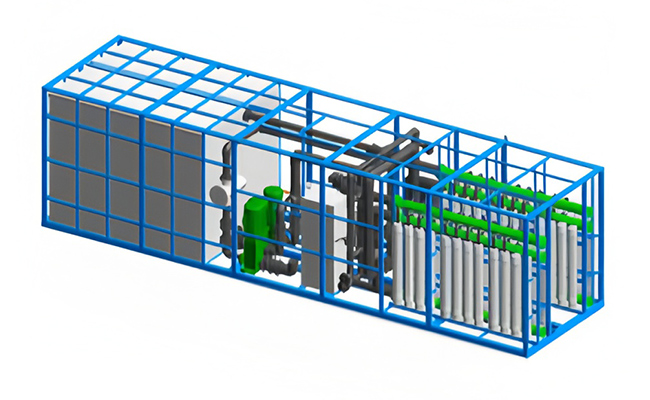
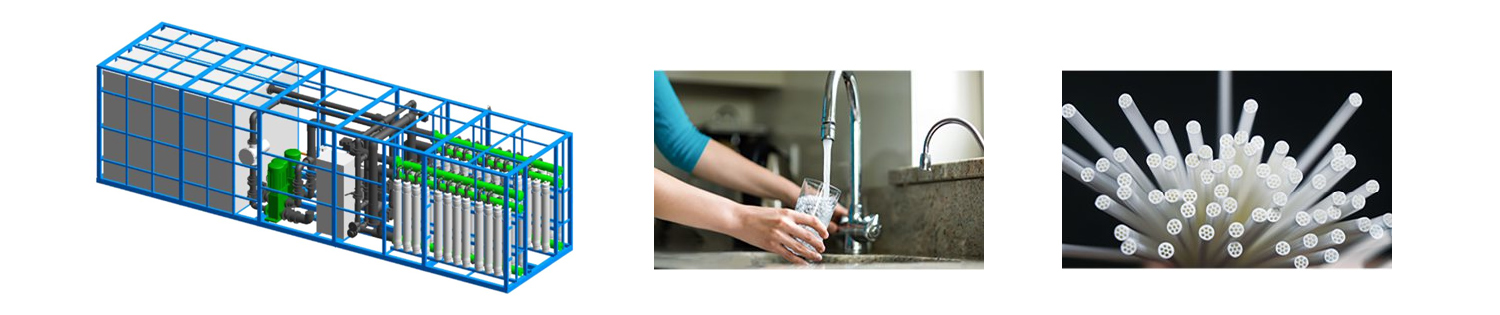
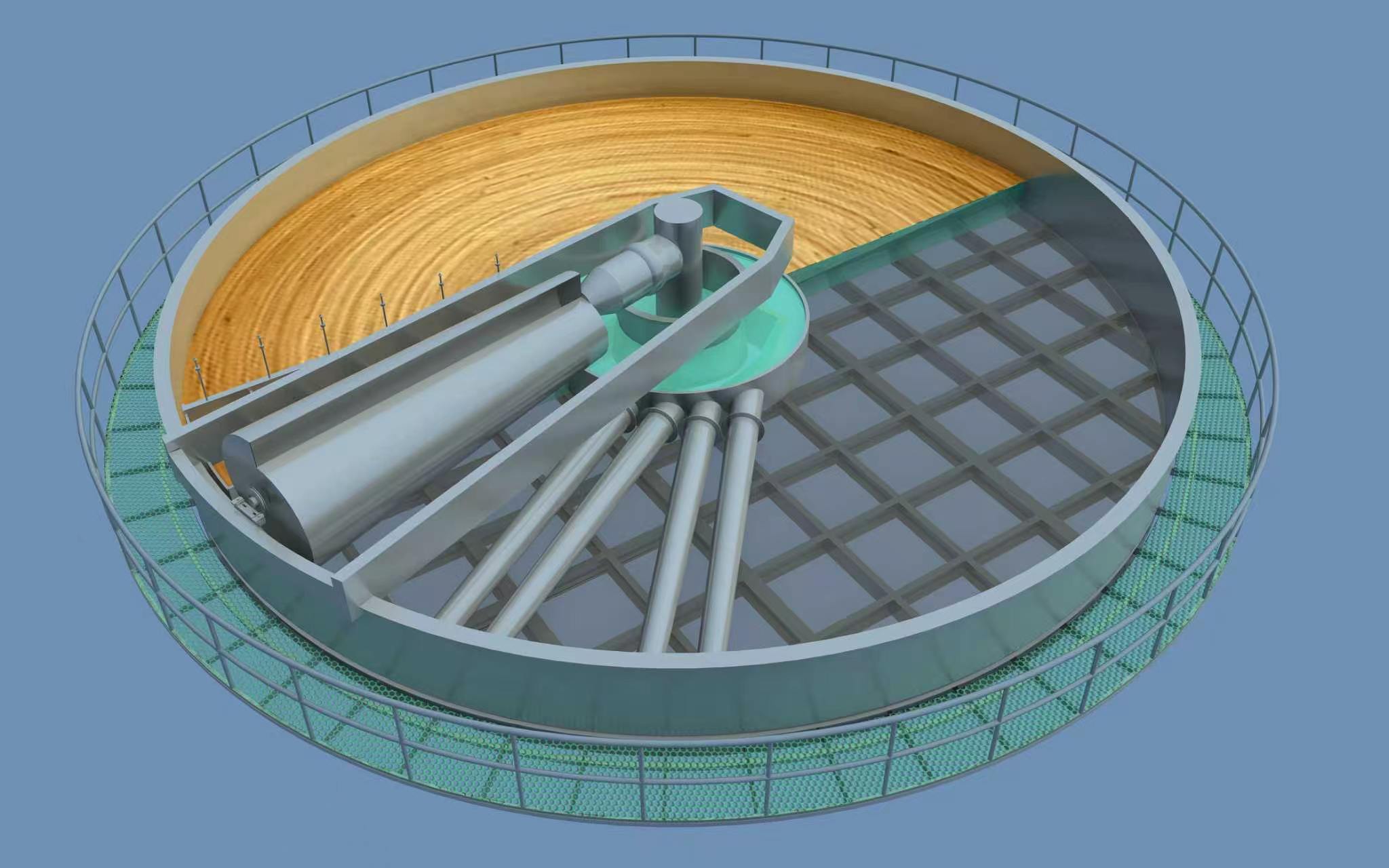
The integrated equipment for ultrafiltration andreverse osmosis membrane production of drinking waterusually refers to a water purification device that integratesultrafiltration (UF) and reverse osmosis (RO) membranetechnologies into one system. This combination designfully leverages the advantages of both technologies,providing an efficient, safe, and stable drinking watersolution.
System water production: 100m3/h.
External dimensions: 12.192x2.438x2.896m * 3 units.
Installed power: approximately 150kw.
Operating power: approximately 149.5kw
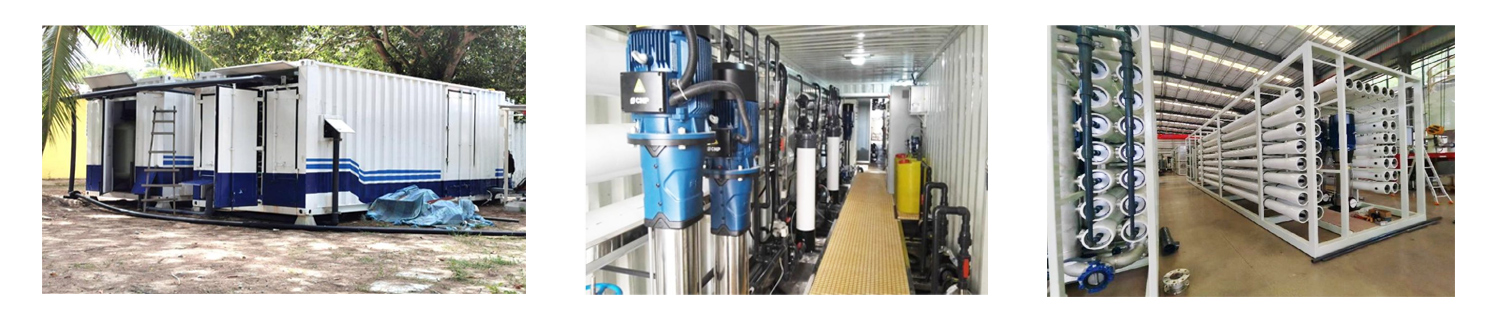
Ultrafiltration first: As a pretreatment, ultrafiltration membranes can efficienty remove suspended particles, colloids, bacteria, viruses, andlarge organic molecules in water (with an accuracy of about 0.01-0.1 microns),effectively protecting subsequent reverse osmosis membranes and
extending their lifespan.
Reverse osmosis core: The reverse osmosis membrane (with an accuracy of about o.0001 microns) can remove small molecule pollutants such asinorganic salts, heavy metal ions (such as lead, arsenic, cadmium), antibiotics, pesticide residues, and dissolved solids (TDS)that cannot beremoved by ultrafiltration.
Final result: The output is almost pure pure water with a sweet taste and extremely high safety.It can be directly consumed raw and meets thestrictest water quality requirements for scenarios such as brewing milk powder, cooking, and direct drinking.
This is one of the most prominent advantages of this integrated device. Traditional pure water machines (single RO) will remove all minerals.
Intelligent design: Many advanced integrated devices adopt "dual effluent" or "mineral reflux" technology.
Pure water mode: used for direct drinking and brewing.
Water purification mode: After ultrafitration purification, but without reverse osmosis, natural minerals such as calcium, magnesium, andpotassium are retained in the water for cooking and soup making, making it healthier.
UItrafiltration protection reduces wastewater ratio: Ultrafiltration, as a pretreatment, greatly reduces the burden on RO membranes andenables them to operate under better conditions. The wastewater ratio of modern all-in-one machines can be optimized to 2:1 or even 3:1(producing 3 parts of pure water and discharging 1 part of wastewater), which is more water-saving than traditional RO machines.
High flux,ready to drink: using high flow membrane elements and built-in pressure tanks (or no tank high flux design), the water outlet speed isfast, no waiting is required, and meets the instantaneous water demand of households.
Space saving: ntegrating preprocessing, core fitering, and post- processing into one chassis, with a compact structure and smallinstallationspace (usually placed in the kitchen).
Easy installation and maintenance:modular design, filter element usually adopts quick connect type, users can easily replace it, andmaintenance costs are low.
Inteligent management: Most devices are equipped with intelligent LCD screens, which display real-time water quality TDS values, fiter lifereminders, fault alarms, etc., providing a good user experience.
Thorough sterilization: The "dual insurance of physical filtration (UF+RO) can almost 100% remove microorganisms without the need forchemical disinfectants, eliminating the risk of biological contamination.
Stable water quality: not affected by fluctuations in municipal tap water quality, always providing stable and reliable high-quality drinking
water.
Material safety: The core components are made of food grade materials to ensure waterway safety.
It can effectively cope with complex and diverse tap water sources, producing safe and high-quality drinking water regardless of high hardness. heavy scale, high risk of heavy metals, or potential risk of organic pollution.